
Research Activities

The laboratory designs, realises and implements research projects, experimental protocols and intervention research across four interconnected strands.

4 strands9 publicationsLifespan 0–99
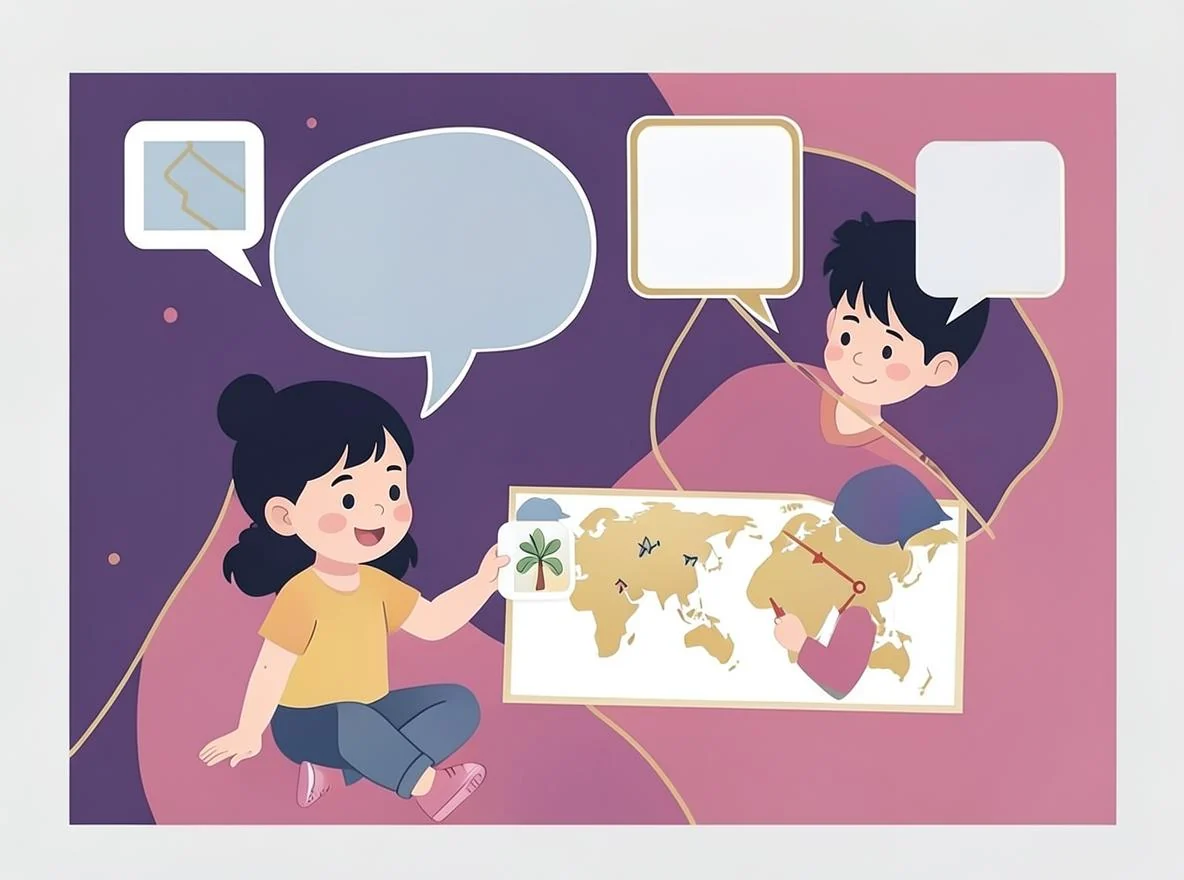
Illustration of children interacting with speech bubbles and a map: language, spatial orientation and thinking AI-generated
Strand 01

Linguistic and Socio-Cognitive Development

The relationship between cognitive and linguistic domains across different learning stages: lexicon and lexical access, morphosyntax, pragmatics, topographical orientation, and the role of spatial language in navigational abilities in typical and atypical development.
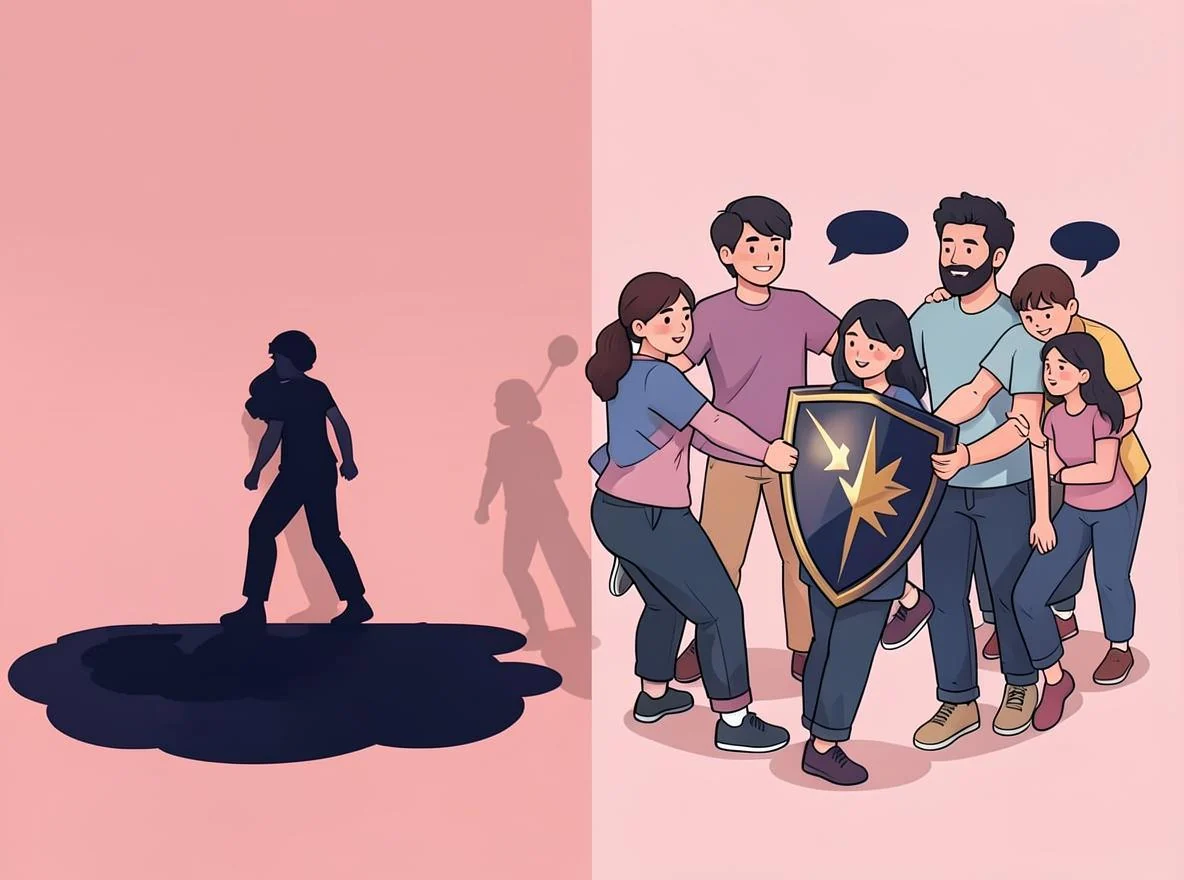

Illustration of one student isolated in the shadows and another protected by peers and a mentor with a shield: bullying prevention, resilience and coping AI-generated
Strand 02

Risk Factors and Protective Mechanisms

Multidimensional analysis of the bullying phenomenon, impact factors in traumatic situations, and coping strategies in developmental adaptation processes.

Illustration of a mind with diverging and converging arrows splitting into many idea lightbulbs then joining into one glowing path: divergent and convergent thinking AI-generated
Strand 03

Creative Thinking and Decision-Making

The relationship between creative thinking, convergent and divergent thinking, decision-making styles and reasoning from a developmental perspective.

Illustration of students walking together along a school path toward a success flag and university building with a mentor: school orientation and career development AI-generated
Strand 04

School Orientation and Career Development

Action-research models aimed at reducing school dropout and enhancing educational success, identifying the personal and environmental components of scholastic and academic achievement.

The four strands, illustrated

Where the work happens

Each illustration below is dedicated to one of the four research strands: language and spatial orientation, risk and protection, creative thinking, and school orientation.

Illustration of children interacting with speech bubbles and a map: language, spatial orientation and thinking — AI-generated illustration AI-generated
Linguistic and Socio-Cognitive Development
Illustration of one student isolated in the shadows and another protected by peers and a mentor with a shield: bullying prevention, resilience and coping — AI-generated illustration AI-generated
Risk Factors and Protective Mechanisms
Illustration of a mind with diverging and converging arrows splitting into many idea lightbulbs then joining into one glowing path: divergent and convergent thinking — AI-generated illustration AI-generated
Creative Thinking and Decision-Making
Illustration of students walking together along a school path toward a success flag and university building with a mentor: school orientation and career development — AI-generated illustration AI-generated
School Orientation and Career Development

Publications

Selected output

Peer-reviewed articles from the lab and its national and international collaborations. Each entry links to the full article summary.

2025

DLD Awareness Day: “It’s There, But You Can’t See It”

The 2025 international campaign on Developmental Language Disorder and why an invisible difficulty deserves a voice in schools, families and clinical …

2025

AppPAROLA: a parenting web app for early language

A free, science-based web app for parents of children aged 24 to 36 months, built by three Italian universities to support early language development.

2025

Adolescence and online vulnerability: the role of FoMO

A cross-sectional study on 360 adolescents published in PlosOne shows how the fear of missing out mediates the link between age and online vulnerabili…

2025

The vulnerable side of tech addiction

New research in Personality and Individual Differences shows how the Vulnerable Dark Triad opens a pathway to problematic smartphone and social media …

2025

Malevolent creativity and cognitive style

Field-dependent and field-independent cognitive styles predict the ability to generate original ideas with the intention of harming others.

2024

Measuring spatial navigation during locomotion

A review of 3,385 screened studies in Heliyon describes the tools available to assess spatial navigation in typically developing children and children…

2023

Field dependence-independence between visual perception and mathematics

A cross-sectional study with children and preadolescents shows that cognitive style mediates the relationship between visual-perceptual skills and mat…

2023

Preschoolers’ perceptual analogical reasoning and map reading

In 56 typically developing 4- to 6-year-olds, perceptual abstract reasoning affected map reading through the mediating effect of spatial language.

2023

Cognitive determinants of planning future routine events

In 45 Italian children aged 5 to 8, fluid intelligence was the main predictor of planning, while inhibition moderated the relationship.

Call for papers

Share your research with the lab.

We welcome contributions on socio-cognitive development, language, spatial cognition, creativity and digital wellbeing across the lifespan. Send an abstract and a short biography to the lab address: we will get back to you with the next steps.

Lab.PCS@univaq.it

Submit an abstract